Completing Form W-8BEN
How to complete Form W-8BEN: a line-by-line guide to the October 2021 form
The form is one page and most lines take a few seconds. The four that cause trouble are the address, the foreign TIN, the treaty claim, and the signature. This guide slows down on those.
Form W-8BEN is the certificate a non-U.S. individual gives to a U.S. payer to say two things: “I am not a U.S. person” and, optionally, “I am entitled to a treaty rate.” It is one page, three parts, and eleven numbered lines. You give it to the payer, never to the IRS.
This guide follows the October 2021 revision, which is the current one. It is educational information, not tax advice. Use it alongside the official instructions linked in the sources.
The form at a glance
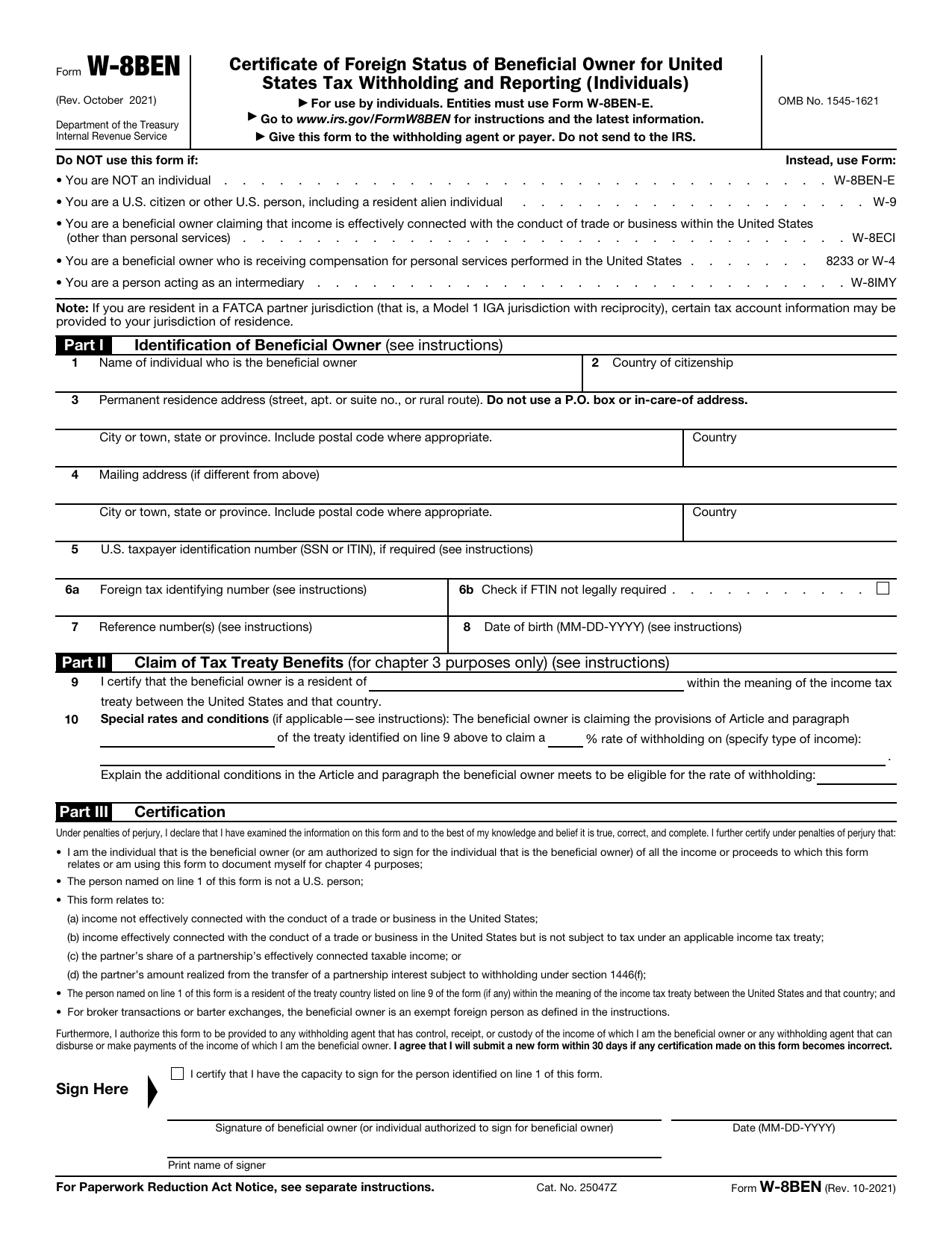
The blank form, rendered from the IRS PDF. Each marker matches a section of this guide.
- Back to figure
Line 1: legal name
Your full legal name as it appears on your passport or national identity document.
- Back to figure
Line 2: country of citizenship
The country of your citizenship, which may differ from your treaty country.
- Back to figure
Line 3: permanent residence address
A street address in your country of tax residence. No PO box, no in-care-of address.
- Back to figure
Line 4: mailing address
Only if different from Line 3. Most people leave it blank.
- Back to figure
Line 5: U.S. taxpayer identification number
SSN or ITIN, only if you already have one.
- Back to figure
Line 6a and 6b: foreign tax identifying number
Your own country's tax number on 6a, or the 6b box if you are not legally required to have one.
- Back to figure
Line 7: reference number
Optional. An account number or anything the payer asked you to add.
- Back to figure
Line 8: date of birth
Month first: MM-DD-YYYY.
- Back to figure
Line 9: treaty country
The country whose treaty you claim, written in full. Leave blank if there is no treaty.
- Back to figure
Line 10: special rates and conditions
Article, rate, income type, and explanation, only in the cases the instructions require.
- Back to figure
Part III: certification
Capacity box, signature, date in MM-DD-YYYY, and printed name.
Before you start: is this the right form?
W-8BEN is for a foreign individual who is the beneficial owner of the income. The instructions list the cases where a different form applies.
- A company, partnership, or trust uses Form W-8BEN-E.
- A U.S. citizen or resident, wherever they live, uses Form W-9.
- Someone claiming that the income is effectively connected with a U.S. trade or business uses Form W-8ECI.
- Someone paid for personal services performed inside the United States and claiming a treaty exemption uses Form 8233.
- An intermediary receiving income for others uses Form W-8IMY.
If none of those describe you, keep reading. If you are not sure, the which W-8 form guide walks through the decision.
Part I: identification of beneficial owner
Line 1: name of individual who is the beneficial owner
Your full legal name as it appears on your passport or national identity document. Not a business name, not a creator name, not a nickname. Payers compare this line against the name on your account, and a mismatch is the most common reason a form is sent back.
Line 2: country of citizenship
The country of your citizenship. If you hold two, the instructions say to enter the one where you are both a citizen and a resident, or, if you are not a resident of either, the one where you were most recently a resident. A U.S. citizen should not be completing this form at all.
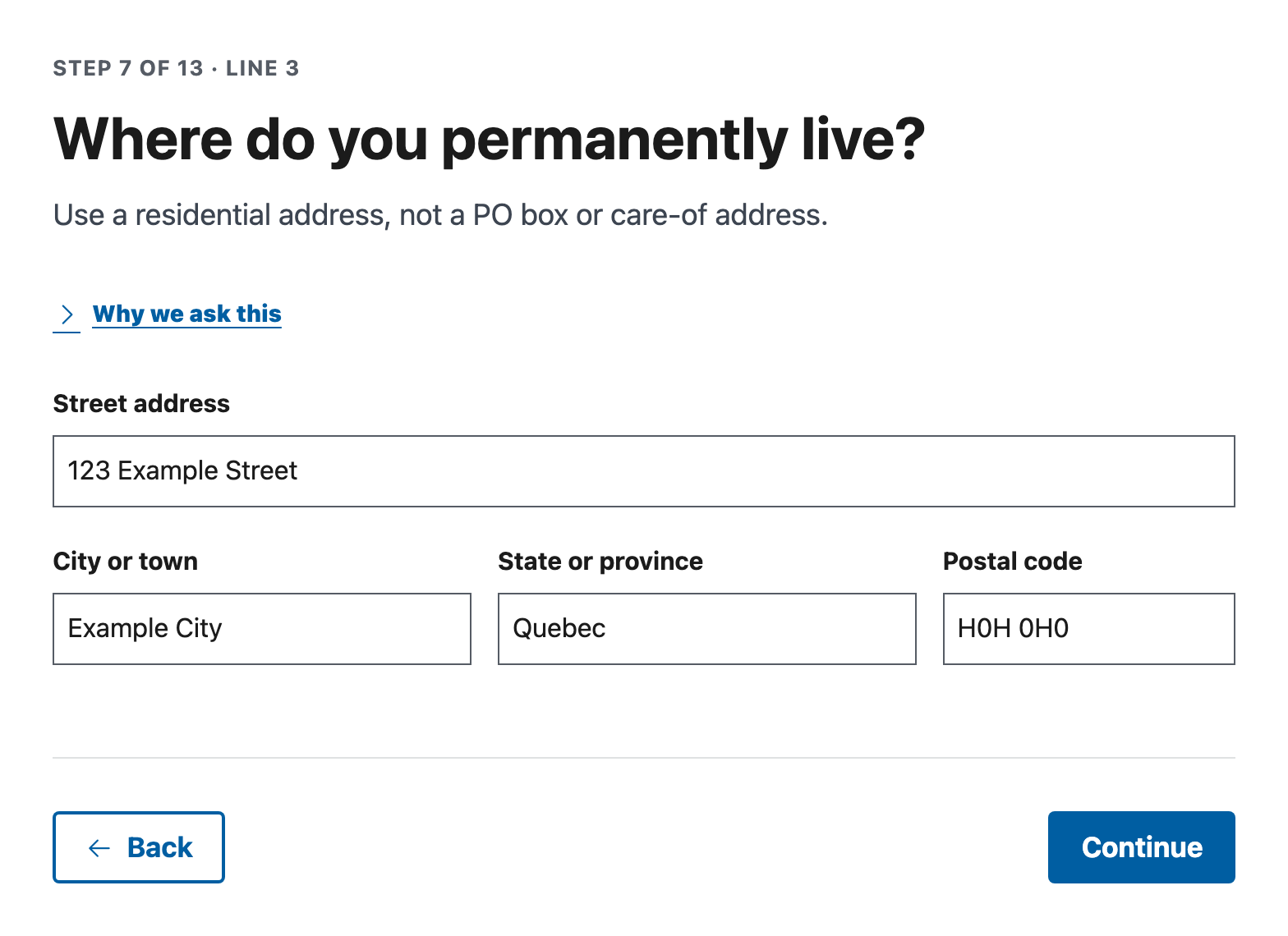
Line 3: permanent residence address
Your permanent residence address in the country where you claim to be a resident for income tax purposes. Three rules from the instructions:
- Do not use a PO box or an in-care-of address, unless it is your registered address and a PO box is normal in your jurisdiction.
- Do not use the address of a financial institution or a mail-forwarding service.
- Include the country name in full. The country box is separate.
A U.S. address on this line contradicts the certification and will trigger a request for supporting documents. If you are claiming a treaty rate, the country here must match the treaty country on Line 9.
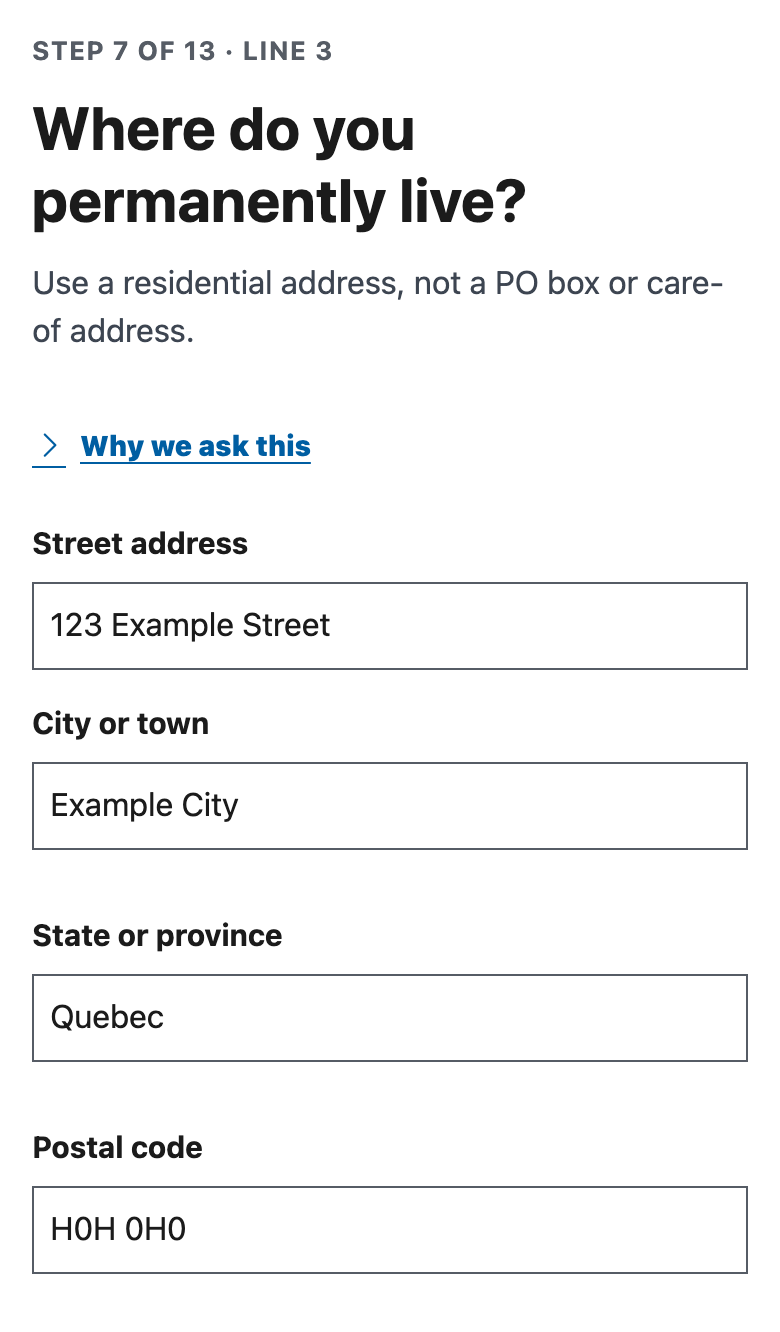
The address step in our W-8BEN interview. Dana Example and the address shown are fictional.
Open full-size screenshotOpen full-size screenshot- Put the street address here
The Street address field holds the street, building, and apartment information. The form-line label at the top shows where this answer goes.
Back to screenshot - Keep the remaining address details separate
Enter the city, state or province, and postal code in their own fields, then continue to the mailing-address question.
Back to screenshot
Line 4: mailing address
Only if it is different from Line 3. Most people leave it blank. A mailing address in the United States is allowed but, like a U.S. residence address, prompts questions from the withholding agent.
Line 5: U.S. taxpayer identification number
Your SSN or ITIN, if you have one. Most non-U.S. individuals do not, and the instructions do not require one for a treaty claim when you provide a foreign TIN on Line 6. The cases where a U.S. TIN is mandatory are narrow: certain annuity claims, and forms given to a partnership with a U.S. trade or business. Do not apply for an ITIN just to fill in this line.
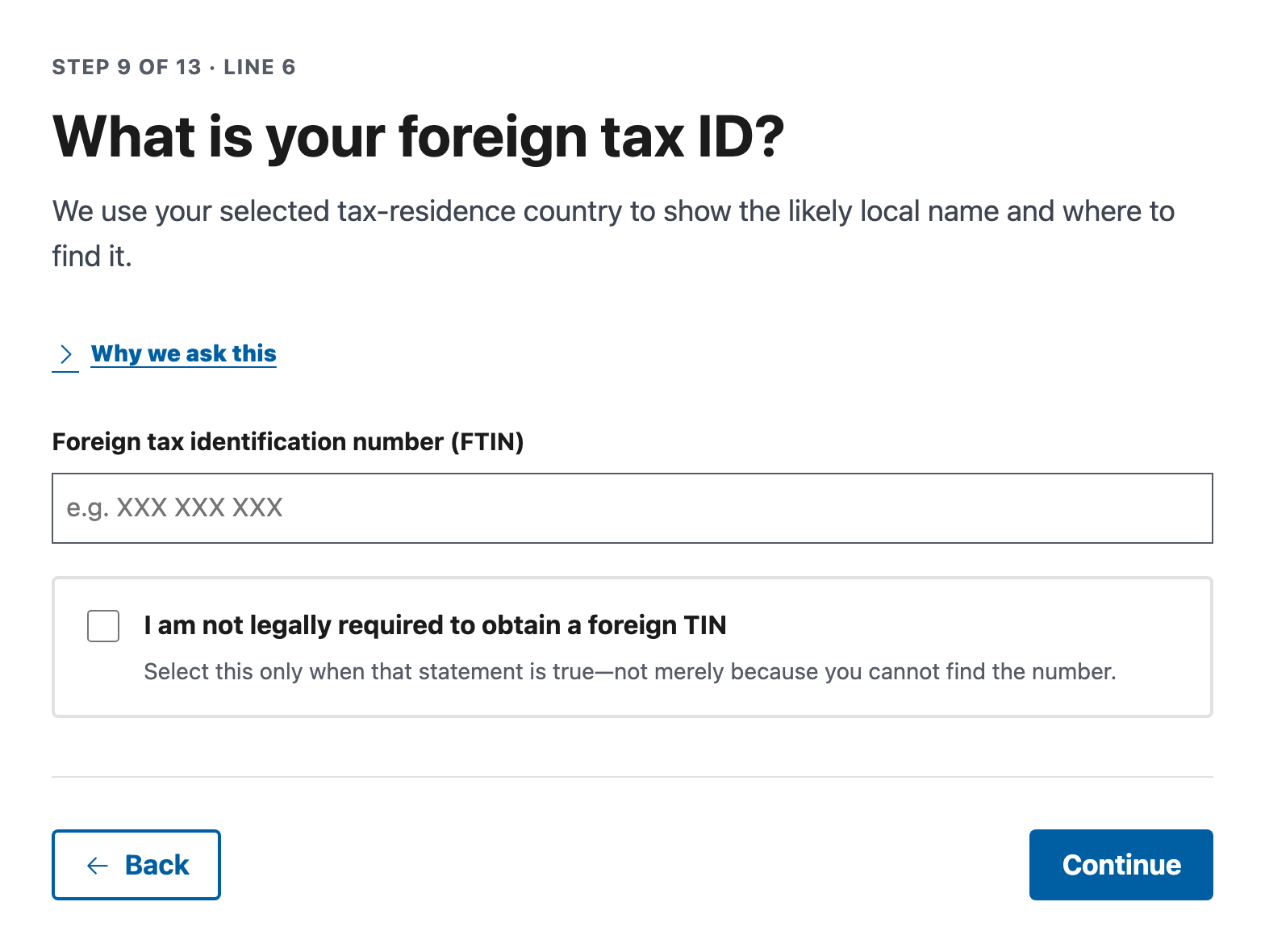
Line 6a: foreign tax identifying number
The tax number issued by your own country. It is required if you hold an account at a U.S. office of a financial institution and receive U.S. source income, and it is what supports a treaty claim in place of a U.S. TIN.
The foreign TIN by country guide lists the number for 50 countries. Enter it without spaces or punctuation if the payer’s system rejects them.
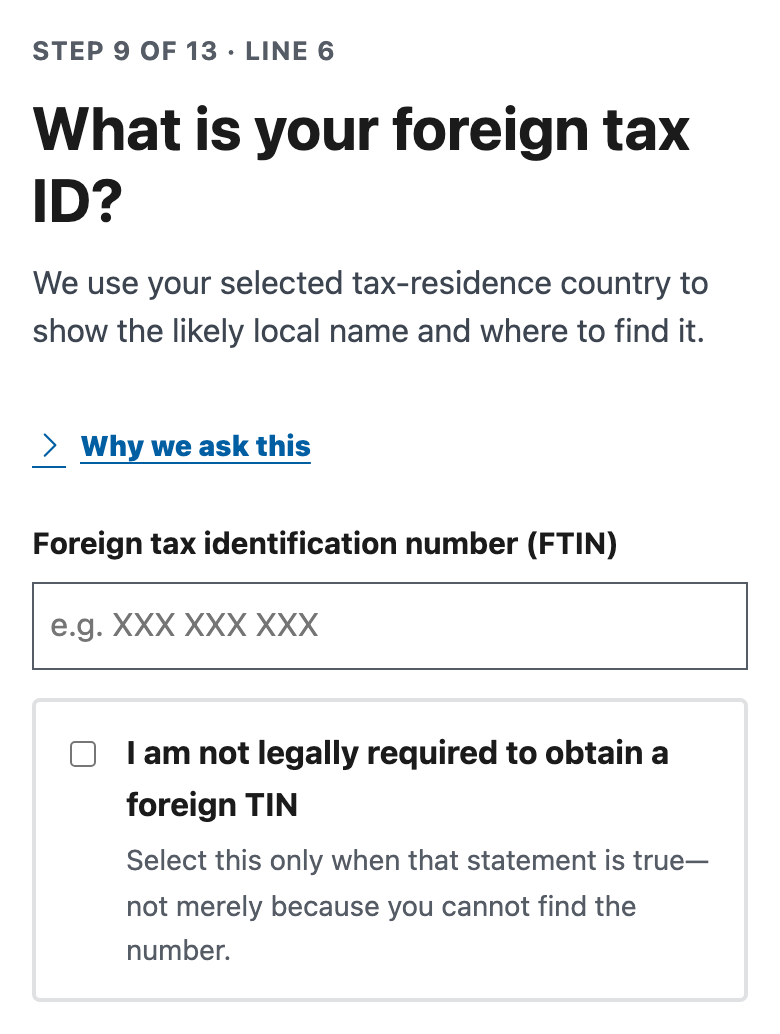
The foreign tax ID step in our W-8BEN interview, with Canada selected earlier as the example tax-residence country. No tax number has been entered.
Open full-size screenshotOpen full-size screenshot- Enter your foreign TIN in this field
Open “Why we ask this” for the country-specific guidance. The U.S. taxpayer ID question is a separate step.
Back to screenshot - Read the exemption before selecting it
The checkbox says “I am not legally required to obtain a foreign TIN.” It is a separate statement, not a shortcut for a missing number.
Back to screenshot
Line 6b: check if FTIN not legally required
Tick this only if your jurisdiction does not issue tax numbers to people in your position, or you are not legally required to obtain one. The IRS also publishes a short list of jurisdictions, currently including Australia and Japan, whose residents are excused from Line 6a. Do not tick 6b because you cannot find your number.
Line 7: reference number(s)
Optional. It is for anything that helps the payer match this form to an account, such as an account number. Some platforms use it for their own purposes; Patreon, for example, puts a VAT number here. Otherwise leave it blank.
Line 8: date of birth
Required. The instructions specify the format MM-DD-YYYY, month first. April 15, 1990 is written 04-15-1990. This is the line most often filled in the wrong order by people used to day-first dates.
Part II: claim of tax treaty benefits
Part II is optional. Complete it only if your country has an income tax treaty with the United States and you want the reduced rate on the income the payer will make. If you complete Line 9, you must also make sure Lines 3 and 6a are consistent with it.
Line 9: treaty country
Write the country in full, as in “I certify that the beneficial owner is a resident of Canada within the meaning of the income tax treaty”. The IRS’s treaty list in the sources tells you whether a treaty exists. A treaty that has been terminated, as with Hungary, or suspended, as with Russia, cannot be claimed.
Line 10: special rates and conditions
Most people leave Line 10 blank. The instructions require it only when the treaty rate depends on conditions beyond residence: royalties where a treaty sets different rates for different types, foreign students and researchers, business profits not attributable to a permanent establishment, and remittance-based provisions.
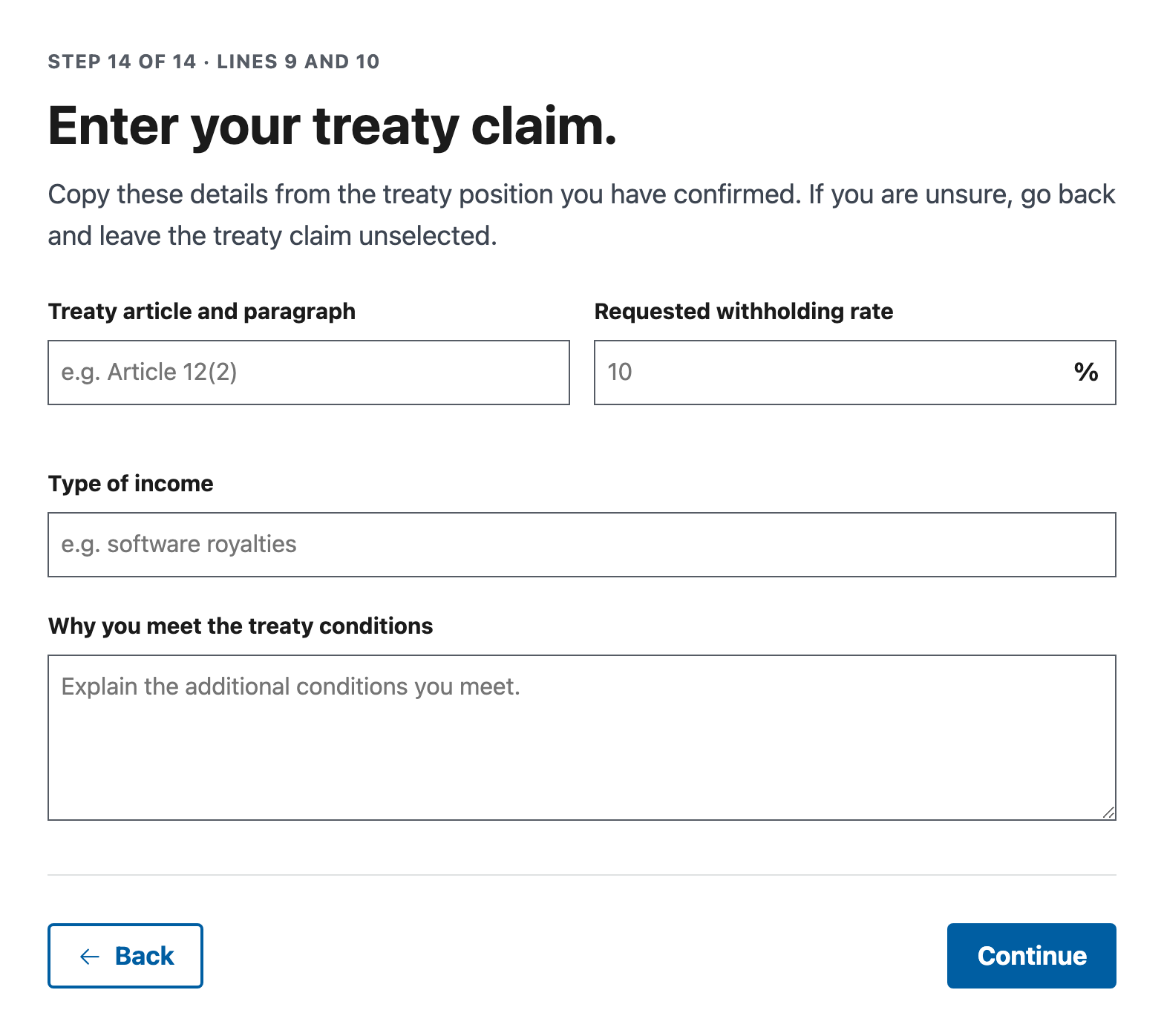
When you do complete it, the line has four blanks: the treaty article and paragraph, the rate as a percentage, the type of income, and a short explanation of why you qualify. The treaty benefits and Line 10 guide gives the article for royalties in every treaty country and explains when the line matters for creators and freelancers.
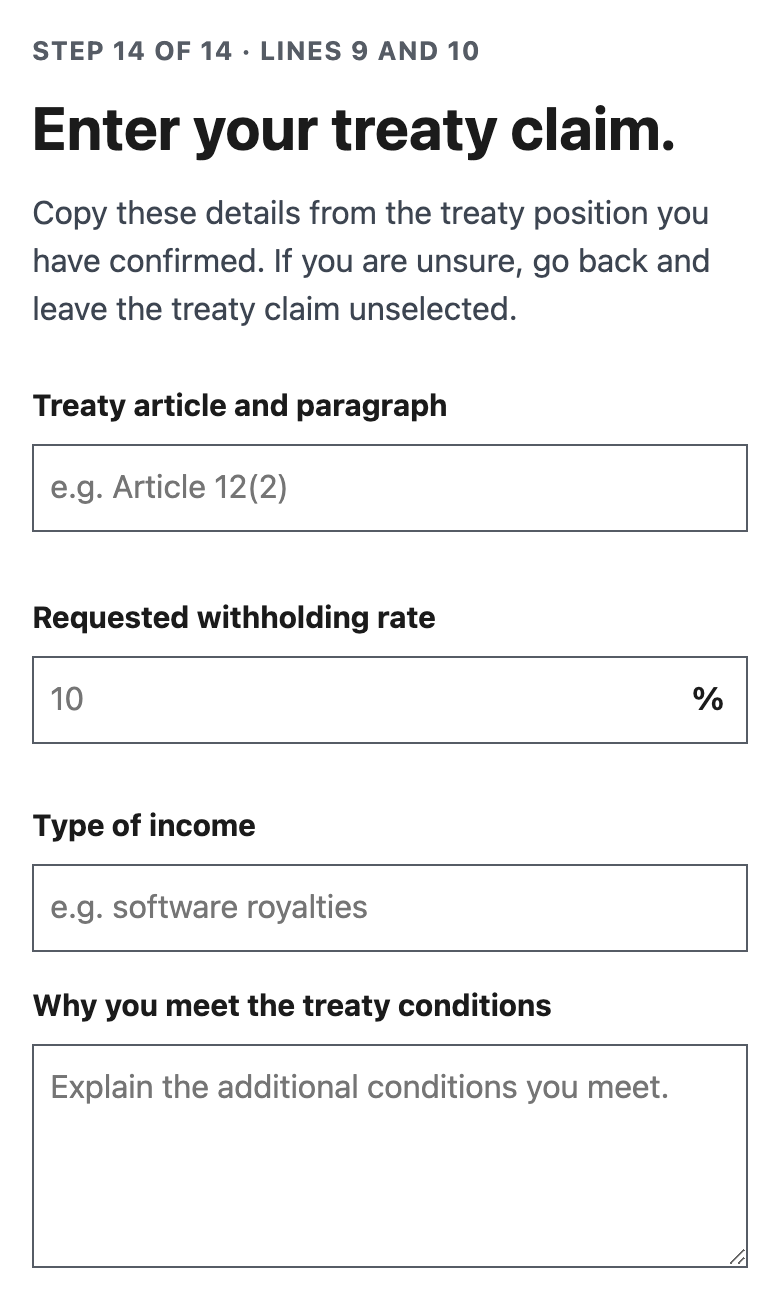
The treaty-details step in our W-8BEN interview, shown after selecting a treaty claim. These fields are deliberately empty; this screenshot does not recommend a treaty position or rate.
Open full-size screenshotOpen full-size screenshot- Article and rate go in separate fields
Enter the confirmed article and paragraph, then the requested percentage. The percent symbol is already shown beside the rate field.
Back to screenshot - Name the income covered by the claim
The Type of income field describes the income for this treaty position.
Back to screenshot - Explain the conditions you meet
Use the explanation field for the additional conditions supporting the claim. If you have not confirmed the position, go back and leave the treaty claim unselected.
Back to screenshot
Part III: certification
The signature
The form “must be signed and dated by the beneficial owner”, or by an agent with a power of attorney, in which case the power of attorney must accompany the form. Sign with your usual signature.
Electronic signatures are allowed, but the instructions set a bar: the signature must include “a time and date stamp and statement that the form has been electronically signed”. Typing your name into the signature box of a PDF is, in the IRS’s words, “not an electronic signature”. A payer’s own tax portal meets the standard because it records the timestamp. A PDF you sign yourself should either be signed by hand or produced by a tool that adds the required stamp and statement.
Print name of signer
Your name again, printed.
Date
The date you sign, in MM-DD-YYYY format. This date starts the validity period, which runs to December 31 of the third following year. The expiration guide has a calculator.
The capacity checkbox
The October 2021 form has a box reading “I certify that I have the capacity to sign for the person identified on line 1 of this form”. Tick it. It applies whether you are the beneficial owner signing for yourself or an agent signing with authority. Older revisions had a free-text “capacity in which acting” field instead, and some platform tools still show one; leave that text field empty when you sign for yourself, because a filled-in capacity field is one of the checks that sends a submission to manual review at Google and other platforms.
Review your answers in our tool
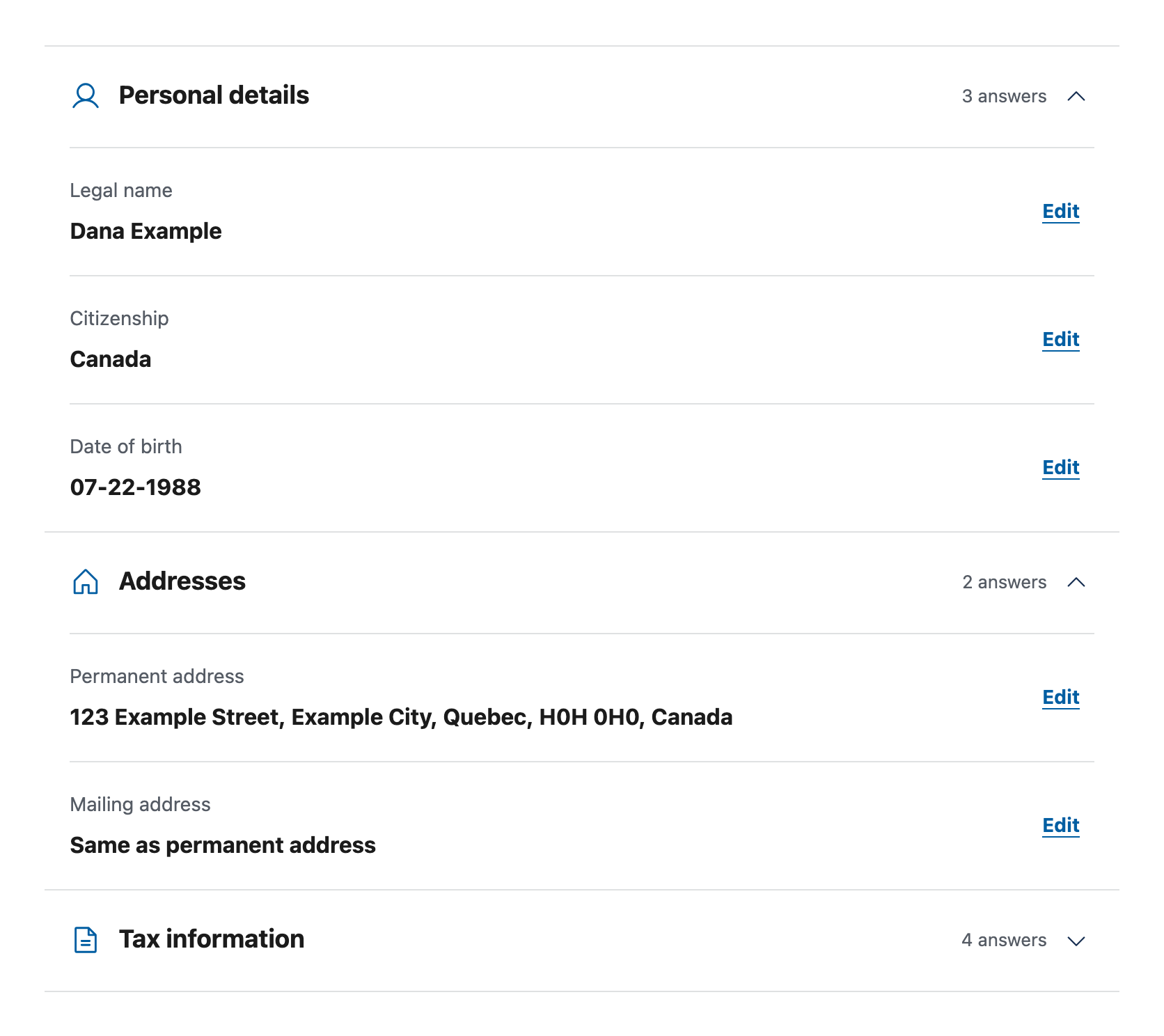
Our guided interview collects the answers one step at a time. Before you move on to signing, use the review screen to check them and correct any entry.
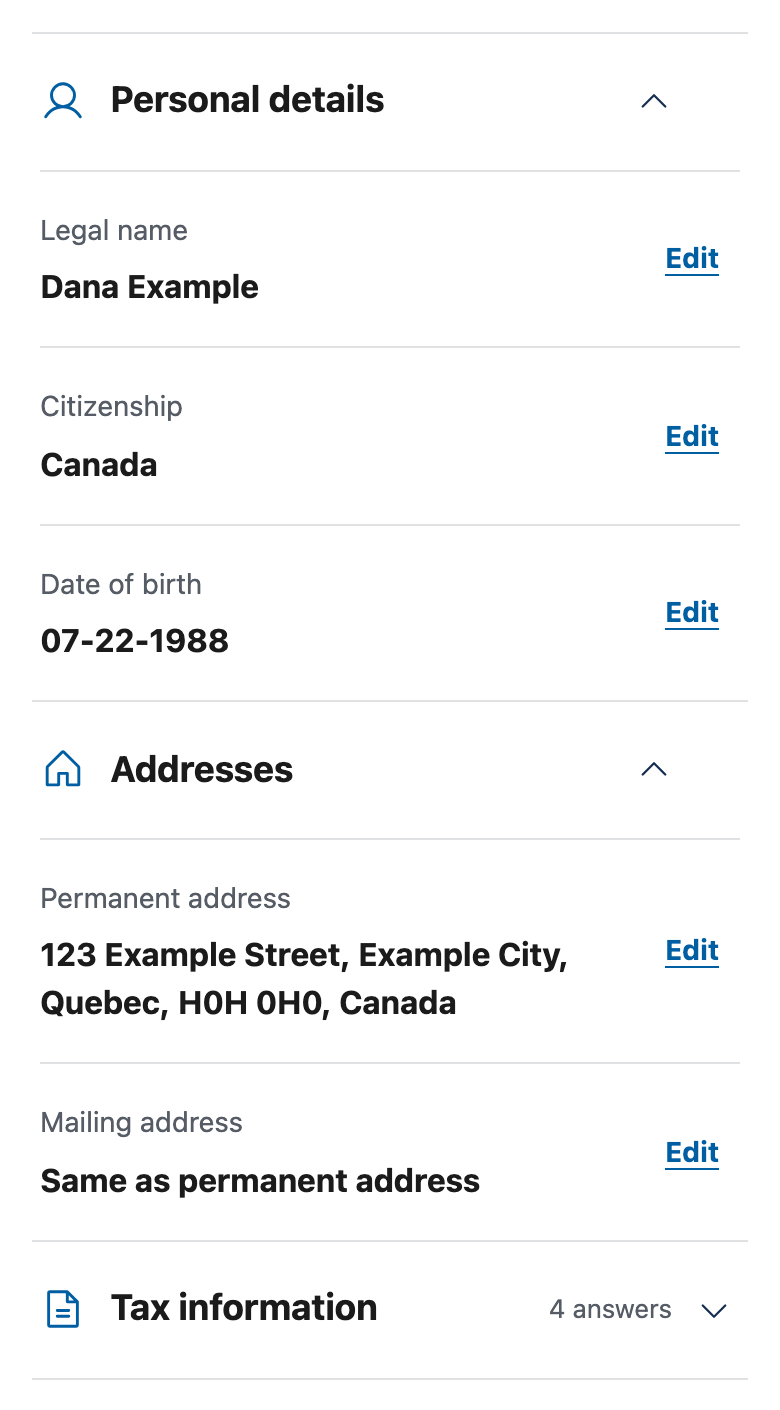
The answer-review panel in our W-8BEN interview, using the fictional Dana Example fixture. This is our preparation tool; a payer’s tax portal has its own screens and submission process.
Open full-size screenshotOpen full-size screenshot- Review the answers in each section
Check Personal details and Addresses, then expand Tax information to review the remaining answers.
Back to screenshot - Use Edit to correct an answer
Each Edit button returns to that question so you can correct it before continuing. Completing and reviewing the answers is free; signing and downloading come after payment.
Back to screenshot
A completed example
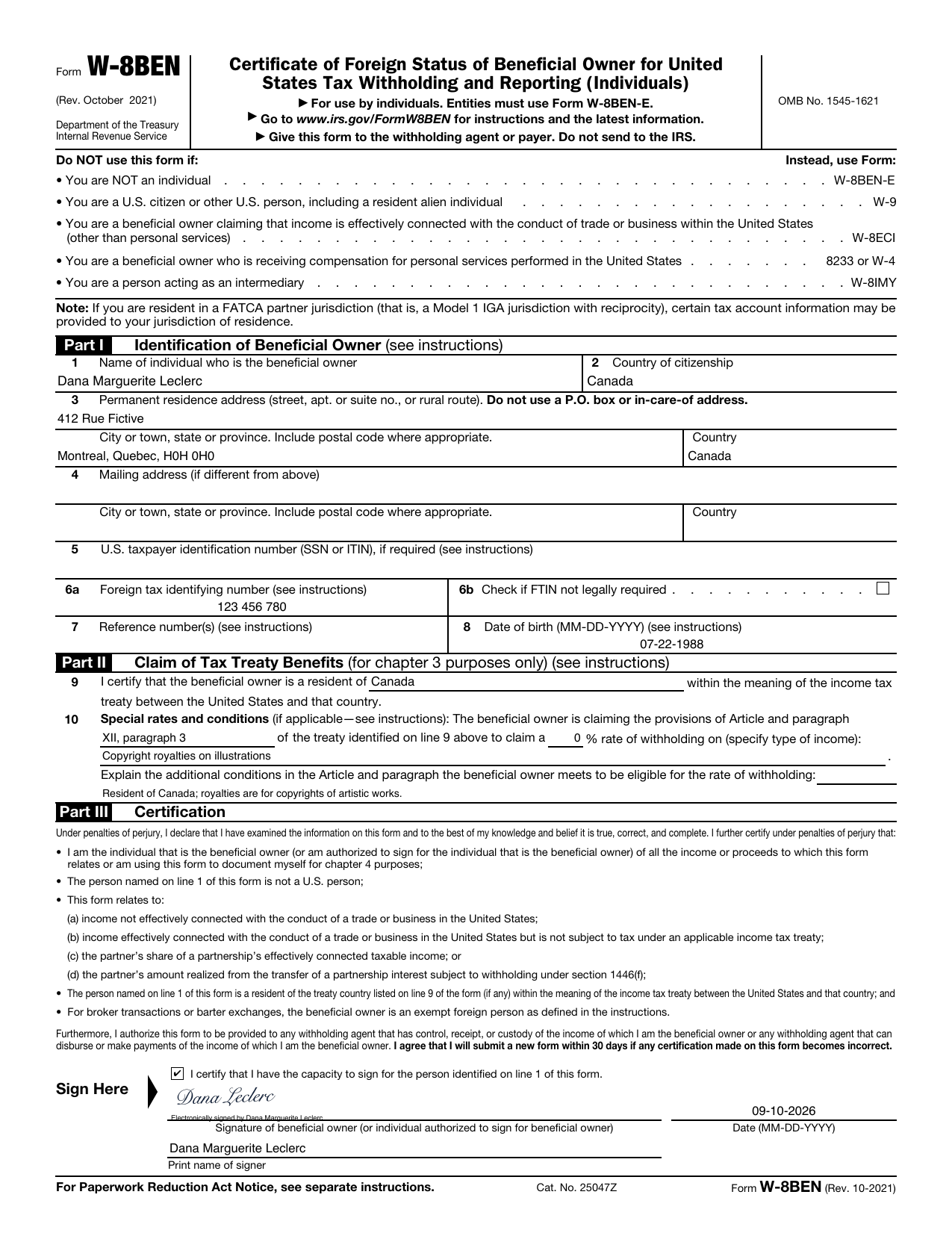
The same form completed for Dana, a fictional Canadian illustrator paid U.S. royalties, generated with the W-8BEN Forms interview and flattened for delivery.
Example only: Any filled details shown are fictional and do not represent a customer record.
- Back to figure
Legal name, not a studio name
Matches the name on Dana's passport and on her payout account.
- Back to figure
Foreign TIN in place of a U.S. number
A nine-digit Canadian Social Insurance Number (fictional here) supports the treaty claim, so Line 5 stays empty.
- Back to figure
Treaty country and Line 10
Canada on Line 9, and Article XII paragraph 3 at 0% for copyright royalties on Line 10, because the Canada treaty has different rates for different royalty types.
- Back to figure
Electronic signature with a statement
The signature carries the signer's name and a note that it was signed electronically, and the date is month first.
| Comparison | What Dana enters | Why |
|---|---|---|
| Line 1 | Dana Marguerite Leclerc | Legal name, as on her passport, not her studio name. |
| Line 2 | Canada | Her only citizenship. |
| Line 3 | 412 Rue Fictive, Montreal, Quebec H0H 0H0, Canada | Street address in her treaty country. No PO box. |
| Line 4 | Blank | Mail goes to the same address. |
| Line 5 | Blank | She has no SSN or ITIN and does not need one. |
| Line 6a | Her nine-digit Social Insurance Number | Canada's tax number for individuals, and it supports the treaty claim. |
| Line 6b | Unticked | Canada issues TINs and she has one. |
| Line 7 | Blank | The publisher did not ask for a reference. |
| Line 8 | 07-22-1988 | Month first, as the instructions require. |
| Line 9 | Canada | The U.S.-Canada treaty is in force. |
| Line 10 | Article XII, paragraph 3; 0%; copyright royalties on illustrations | Canada's treaty sets different rates for different royalty types, so the instructions require Line 10 here. |
| Part III | Signature, capacity box ticked, 09-10-2026, printed name | The box certifies she has the capacity to sign. She signs for herself, so any free-text capacity field in a platform tool stays empty. |
The mistakes that get forms declined
- A name that does not match the account. Fix Line 1 or the account, not the form.
- A U.S. address on Line 3 or Line 4 without an explanation.
- A treaty country on Line 9 that differs from the country on Line 3.
- A missing foreign TIN when claiming a treaty rate and no U.S. TIN.
- Day-first dates on Line 8 or in Part III.
- A typed name in the signature box with no timestamp or e-signature statement.
- An old revision of the form. Check for “Rev. October 2021”.
- Corrections written over the original entries. Start a clean form.
After you finish
Give the form to the person who asked for it, keep a copy, and note the expiry date. The where to send guide covers delivery, and the after you submit guide covers review, withholding, and the year-end statement.
Frequently asked questions
Do I need a U.S. tax number to fill out Form W-8BEN?
No. Line 5 asks for an SSN or ITIN only if you already have one. A treaty claim can be supported by your own country's tax number on Line 6a instead. The instructions require a U.S. TIN only in narrow cases such as certain annuities or forms given to a partnership with a U.S. trade or business.
What date format does Form W-8BEN use?
Month, day, year: MM-DD-YYYY. The instructions give the example of April 15, 1956 written as 04-15-1956. This applies to Line 8 and to the date next to your signature.
Should I fill in Line 10 on Form W-8BEN?
Only if the treaty rate you claim depends on conditions beyond residence. The instructions require it for royalties where the treaty sets different rates for different types, for foreign students and researchers, for business profits without a permanent establishment, and for remittance-based provisions. Portfolio dividends and interest through a broker normally need Line 9 alone.
Can I type my name as the signature on Form W-8BEN?
Not on a PDF you prepare yourself. The instructions say a typed name is not an electronic signature; an electronic signature must carry a time and date stamp and a statement that the form was signed electronically. Sign by hand, or use a tool or a payer's portal that records the stamp.
Do I tick the capacity box on Form W-8BEN?
Yes. The current form has a checkbox certifying that you have the capacity to sign for the person on Line 1, and it applies whether you sign for yourself or as an authorized agent. Some platform tools still show a free-text capacity field from older revisions; leave that empty when you sign for yourself, because platforms such as Google flag a filled-in capacity field for manual review.
Can I use a PO box on Form W-8BEN?
Not on Line 3, the permanent residence address, unless a PO box is your registered address and normal in your jurisdiction. Line 4, the mailing address, may be a PO box. A permanent address in care of someone else or at a financial institution is also not accepted.
Which version of Form W-8BEN should I use?
The current revision, dated October 2021, available from IRS.gov. Payers may not accept older revisions for new submissions. The revision date is printed at the top left of the form.
Important: This guide provides general educational information, not tax or legal advice. It does not determine your status or guarantee that a payer will accept a form. Read the current IRS instructions and the payer’s own guidance before signing.